

Your Daily Language Update
Welcome back, language learner! Great to have you here.
Not yet following? Join the Languages Central community!

Barely Visible — Scotland in the Cloud and Rain
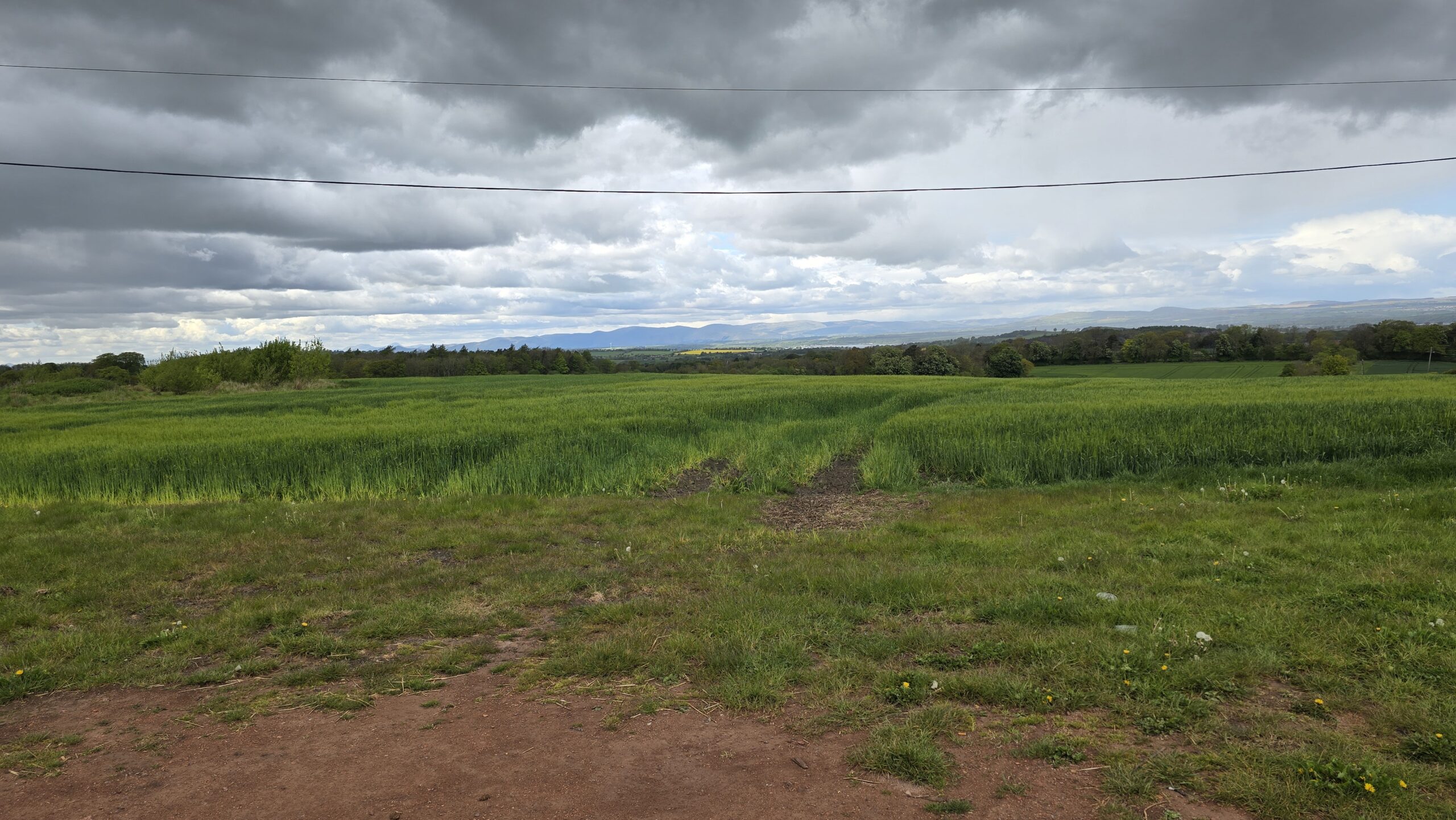
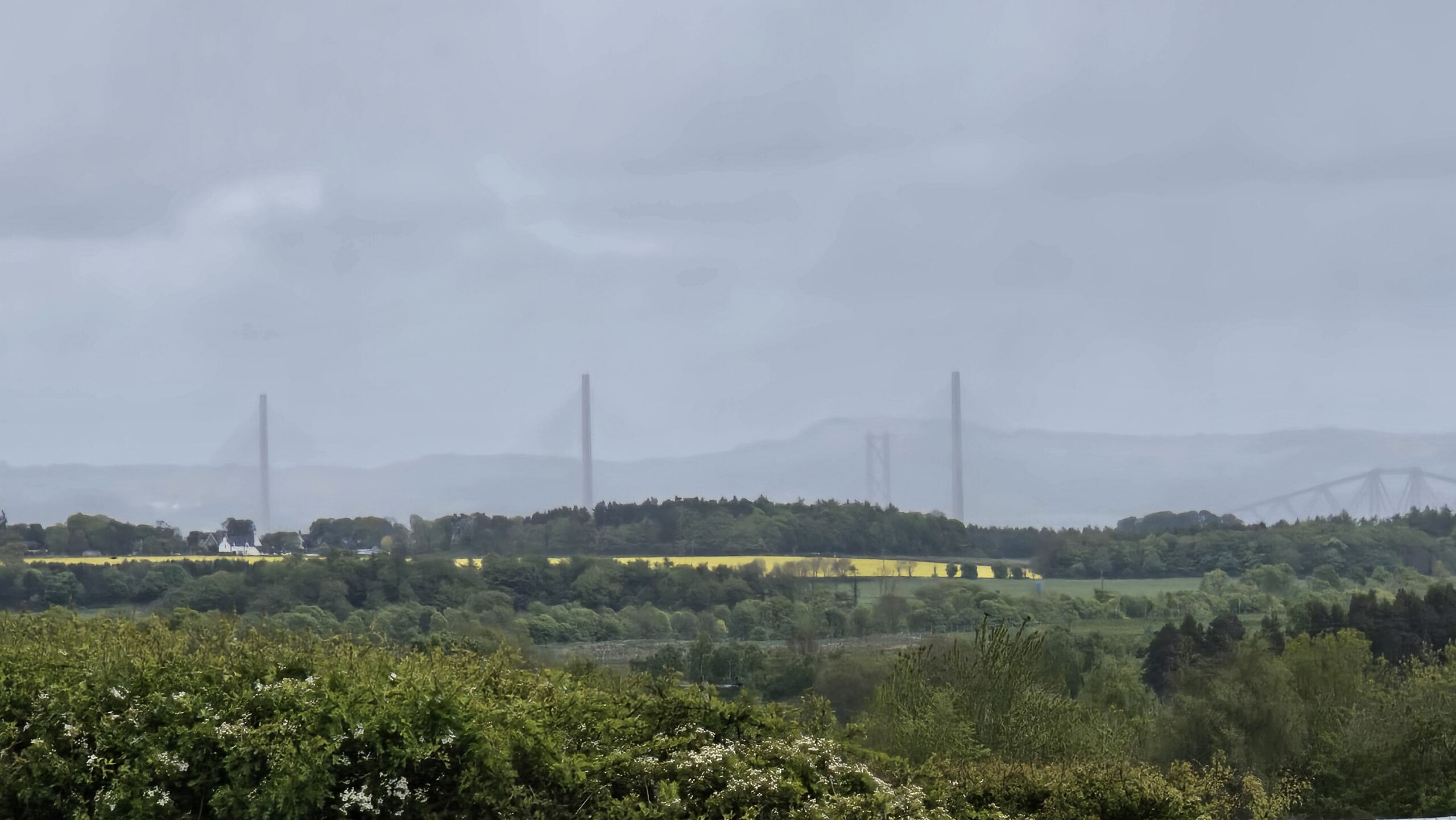
Scotland is doing what Scotland does best today — a thick blanket of cloud has been pulled across the sky, the rain is barely holding off, and the view from home has shrunk dramatically. The three Forth bridges could scarcely be made out through the murk this morning, and the Trossachs have been completely swallowed by low cloud. And yet, on days like this, there is something almost dramatic about it — the horizon disappears, distances become mysterious, and on the clearest patches you can just make out the faint silhouette of the mountains beyond. Scotland in the grey is still Scotland.
Today the weather is bad. The sky is very grey. There is cloud and rain. I can see three bridges near my home. Today I can hardly see them! The mountains are also there, but today they are hidden. Scotland has bad weather sometimes. But it is still beautiful!
Today is a cloudy and rainy day in Scotland. From my home I can usually see the three Forth bridges — the Forth Road Bridge, the Queensferry Crossing, and the famous Forth Rail Bridge. But today I could barely see them because of the cloud and rain. The Trossachs, the beautiful hills to the north, were also hidden. When the sky is clear, I can even see the mountains in the distance. Today there was almost nothing to see! This kind of weather is very typical in Scotland.
Today has been a classic grey Scottish day — thick cloud, light rain, and a view that has shrunk to almost nothing. From home on a clear day, you can see all three Forth bridges: the Victorian Forth Rail Bridge, the original Forth Road Bridge, and the modern Queensferry Crossing. You can also make out the Trossachs hills to the north-west. On the very clearest days, the mountains beyond are just visible on the horizon. Today, the three bridges could scarcely be seen through the murk, the Trossachs had been swallowed entirely by low cloud, and the mountains were nowhere to be seen. Barely a hint of them remained. It is one of those days that reminds you just how dramatically Scotland’s landscape can change with the weather.
On a good day, the view from home is genuinely remarkable — all three Forth bridges strung across the water in a line, from the Victorian lattice ironwork of the Rail Bridge through to the elegant cable-stayed Queensferry Crossing; the rolling outline of the Trossachs to the north-west; and on the clearest mornings, the faint but unmistakable profile of the Highland mountains pushing up above the horizon. Today offered none of that. A heavy lid of cloud had been pulled down over everything, the three bridges could barely be made out, and the Trossachs had been reduced to a vague grey suggestion. The mountains had vanished completely. It is easy to forget, on days like this, just how far you can see when Scotland decides to show itself — and perhaps that is what makes those clear days feel like such a gift.
There is a particular quality to a Scottish grey day that is worth paying attention to, even when visibility has collapsed to the point where familiar landmarks become ghosts of themselves. This morning the three Forth bridges — the Rail Bridge, the Road Bridge, and the Queensferry Crossing, that extraordinary procession of engineering across the centuries — could scarcely be discerned through the low cloud and persistent drizzle that had settled over the estuary. The Trossachs, normally a reassuring presence on the north-western horizon, had been entirely absorbed into the overcast. The mountains beyond — glimpsed on clear days as a faint, ink-wash line against the sky, deceptively close, deceptively still — were nowhere to be seen. And yet there is a strange compensation in the grey: it compresses the world, thickens the air, and makes the distance feel earned. Scotland withholds its views and makes you wait for them. That is part of the contract.
5 Words to Learn
| English | Chinese | Dutch | French | Gaelic | German | Hindi | Indonesian | Japanese | Russian | Spanish |
|---|---|---|---|---|---|---|---|---|---|---|
| Visibility | 能见度 (Néngjiàndù) | Zichtbaarheid | Visibilité | Lèirsinn | Sichtweite | दृश्यता (Dṛśyatā) | Jarak pandang | 視界 (Shikai) | Видимость | Visibilidad |
| Overcast | 阴天 (Yīntiān) | Bewolkt | Couvert | Neulach | Bedeckt | बादलों से ढका | Mendung | 曇り (Kumori) | Пасмурный | Nublado |
| Horizon | 地平线 (Dìpíngxiàn) | Horizon | Horizon | Fàire | Horizont | क्षितिज (Kṣitij) | Cakrawala | 地平線 (Chiheisen) | Горизонт | Horizonte |
| Murk | 阴暗 (Yīn’àn) | Schemering | Obscurité | Doilleireachd | Düsternis | धुंध (Dhundh) | Kegelapan | 薄暗さ (Usugurasa) | Мрак | Penumbra |
| Silhouette | 轮廓 (Lúnkuò) | Silhouet | Silhouette | Faileas | Silhouette | आकृति (Ākṛti) | Siluet | シルエット (Shiruetto) | Силуэт | Silueta |
“Barely”, “Hardly”, “Scarcely” — Near-Negative Adverbs
Tone differences:
— Barely — neutral; something is only just possible
— Hardly — most common in speech; also: “hardly any” + noun
— Scarcely — formal and literary; adds dramatic weight
⚠️ Already negative — do NOT add another negative:
✗ “I couldn’t barely see it.” ✓ “I could barely see it.”
Formal inversion (literary/written English):
“Scarcely had the cloud lifted when the rain began again.”
“Hardly had I stepped outside when the drizzle started.”
The Passive Voice — Combined with Near-Negatives
Active: “The cloud swallowed the Trossachs.”
Passive: “The Trossachs were swallowed by the cloud.”
Combined:
“The bridges could barely be seen.”
“The mountains could scarcely be made out.”
“The Trossachs were hardly visible.”
Ready to Improve Your English?
Personalised one-to-one English lessons for all levels — A1 to C1+.
Book your session today and start your journey to fluency!