

Your Daily Language Update
Welcome back, language learner! Great to have you here.
Not yet following? Join the Languages Central community!
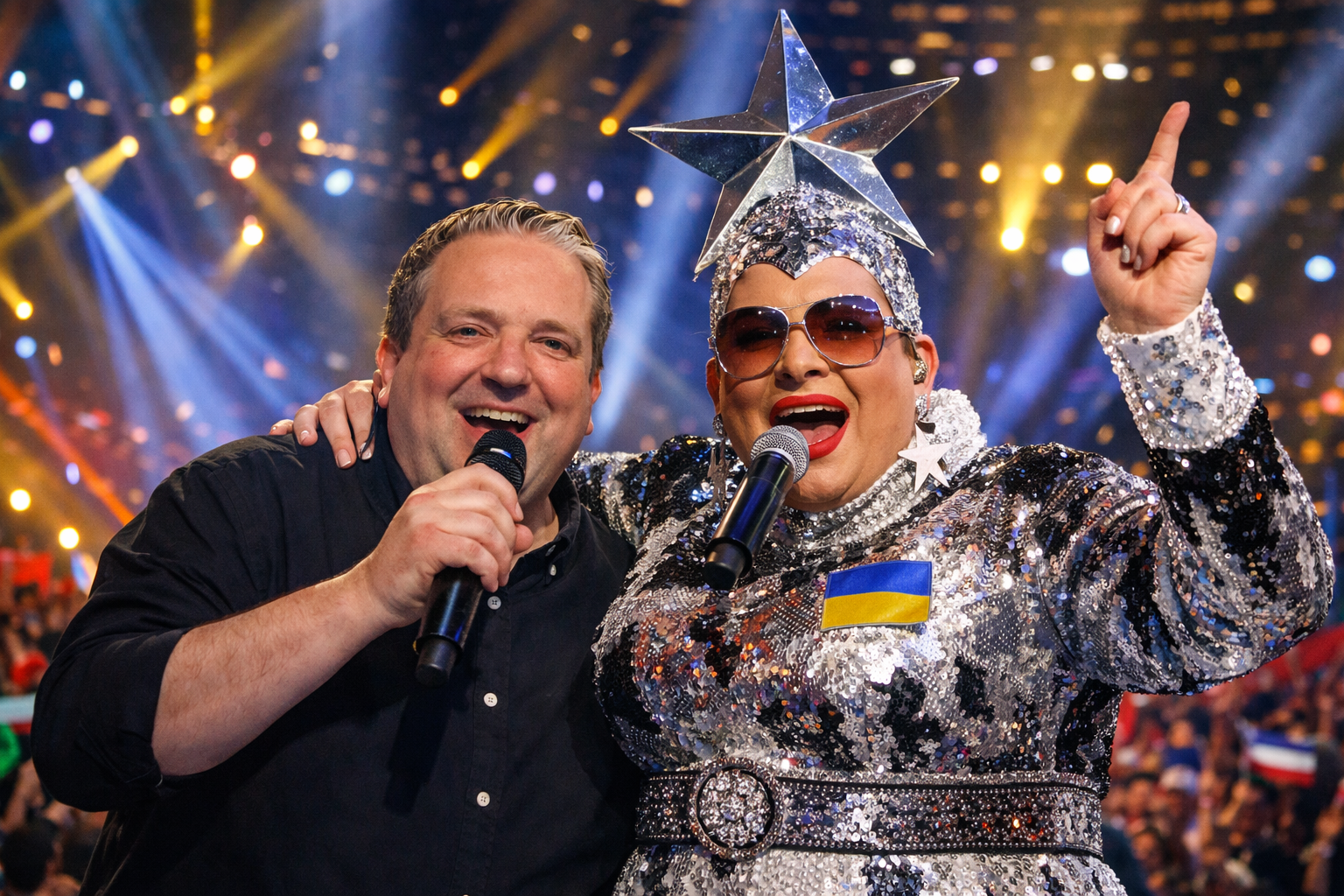
Will You Be Watching Eurovision Tonight? 🎤🌍
Tonight is the Eurovision Song Contest Grand Final — and yes, I will absolutely be watching! For me, Eurovision is more than just a spectacular show; it is a wonderful celebration of languages, cultures, and musical diversity. As someone who is passionate about languages, I love hearing entries performed in French, Italian, Portuguese, Ukrainian, Armenian, and so many others. Not every language teacher gets a night where the whole of Europe sits down and listens to language being performed with such joy and energy. I will be taking notes!
Tonight is a very big show on TV. It is called Eurovision. Many countries will sing songs. The songs are in many different languages. I will be watching tonight. It is very exciting! Will you be watching too? I love hearing different languages. Eurovision is very colourful and fun!
Tonight is the Eurovision Song Contest Grand Final! This is a very famous music competition. Many countries will be performing songs tonight. Some countries will be singing in English, but many will be singing in their own languages — French, Italian, Spanish, Ukrainian, and more. I will be watching the show live on TV. Will you be watching too? Eurovision is a great way to hear many different languages. As a language teacher, I love this show very much!
Tonight is the Grand Final of the Eurovision Song Contest, and I will certainly be watching! Eurovision is one of those rare events where language takes centre stage — not just English, but French, Italian, Portuguese, Ukrainian, Armenian, and many others. Each entry brings its own musical style and linguistic character, and for a language enthusiast, that is endlessly fascinating. The show will be broadcast live tonight, with millions of people across Europe and beyond tuning in. Viewers will be voting for their favourite entries, presenters will be switching between languages, and somewhere in an arena, a very lucky singer will be hearing their name called as tonight’s winner. I will be keeping score — and enjoying every language along the way!
The Eurovision Song Contest Grand Final takes place tonight, and I will be glued to the screen from the first note to the last scoreboard. For most people, Eurovision is the spectacle — the staging, the costumes, the inexplicable key changes — but for a language teacher, what makes it truly special is the extraordinary range of languages on display. Entries will be performed in French, Italian, Ukrainian, Armenian, Portuguese, and various others, and hearing each country choose how to express itself linguistically is genuinely interesting. Some will opt for English, chasing the broadest possible audience; others will perform in their mother tongue with a kind of quiet defiance that I find rather wonderful. The voting segment, meanwhile, is itself a masterclass in multilingual communication — with spokespersons switching effortlessly between their national language and English all evening. Will you be watching? What language will your favourite act be singing in?
Tonight the Eurovision Song Contest Grand Final will be broadcast live, and I will be watching with the particular attentiveness of someone for whom the evening offers more than entertainment. Eurovision is, among other things, a fascinating annual survey of how European nations choose to present themselves linguistically. The question of which language to perform in is not a trivial one: it encodes assumptions about audience, identity, and aspiration. Those who perform in their native language — whether Ukrainian, Armenian, Portuguese, or Icelandic — signal something different from those who reach for English as a vehicle for maximum reach. Neither choice is wrong, and both are interesting. The voting sequence, conducted in a baroque mixture of national languages, English, and French, is itself a linguistic spectacle — a reminder that multilingualism is not merely a skill but a performance, and that Europe’s linguistic diversity, however complex politically, remains one of the continent’s defining and most extraordinary features. I shall be watching with genuine pleasure. What language will be winning?
A Language Lover’s Guide to Eurovision 🎵
Did you know? Until 1999, Eurovision had a rule that entries must be performed in one of the country’s official languages. Since that rule was dropped, English has become dominant — but many countries still proudly perform in their own language, and these entries are often among the most memorable.
Languages commonly heard at Eurovision:
🇫🇷 French · 🇮🇹 Italian · 🇵🇹 Portuguese · 🇺🇦 Ukrainian · 🇦🇲 Armenian
🇮🇸 Icelandic · 🇬🇷 Greek · 🇷🇴 Romanian · 🇷🇸 Serbian
Fun fact: Italy has one of the best Eurovision records when performing in Italian — proof that singing in your own language can be a winning strategy!
5 Words to Learn
| English | Chinese | Dutch | French | Gaelic | German | Hindi | Indonesian | Japanese | Russian | Spanish |
|---|---|---|---|---|---|---|---|---|---|---|
| Broadcast | 播出 (Bōchū) | Uitzending | Diffusion | Craolaidh | Sendung | प्रसारण (Prasāraṇ) | Siaran | 放送 (Hōsō) | Трансляция | Transmisión |
| Performer | 表演者 (Biǎoyǎn zhě) | Artiest | Artiste | Cleasaiche | Künstler | कलाकार (Kalākār) | Penampil | パフォーマー (Pafōmā) | Исполнитель | Artista |
| Scoreboard | 记分板 (Jìfēn bǎn) | Scorebord | Tableau des scores | Clàr-sgòr | Anzeigetafel | स्कोरबोर्ड (Skoraborḍ) | Papan skor | スコアボード (Sukōbōdo) | Табло | Marcador |
| Multilingual | 多语言的 (Duō yǔyán de) | Meertalig | Multilingue | Ioma-chànanach | Mehrsprachig | बहुभाषी (Bahubhāṣī) | Multibahasa | 多言語の (Tagonogo no) | Многоязычный | Multilingüe |
| Spectacular | 壮观的 (Zhuàngguān de) | Spectaculair | Spectaculaire | Sgoinneil | Spektakulär | शानदार (Śānadār) | Spektakuler | 壮観な (Sōkan na) | Потрясающий | Espectacular |
The Future Continuous — “Will Be + -ing”
Form: will + be + verb-ing
“Tonight I will be watching Eurovision.”
When to use it:
— Action in progress at a future time: “At 9pm the show will be starting.”
— Planned or expected events: “Twenty-five countries will be competing tonight.”
— Polite questions about plans: “Will you be watching the show?”
— Happening as a matter of course: “Presenters will be switching between languages all evening.”
Future Continuous vs Future Simple:
“I will watch Eurovision.” — simple intention
“I will be watching Eurovision.” — arranged, already in progress, ongoing
“Shall” vs “Will”: In formal English, shall can replace will for I/we:
“I shall be watching with great interest tonight.”
Ready to Improve Your English?
Personalised one-to-one English lessons for all levels — A1 to C1+.
Book your session today and start your journey to fluency!