
Your Daily Language Update
Welcome back, language learner! Great to have you here.
Not yet following? Join the Languages Central community!
Eight Legs and No Warning — Spiders in the Garden!
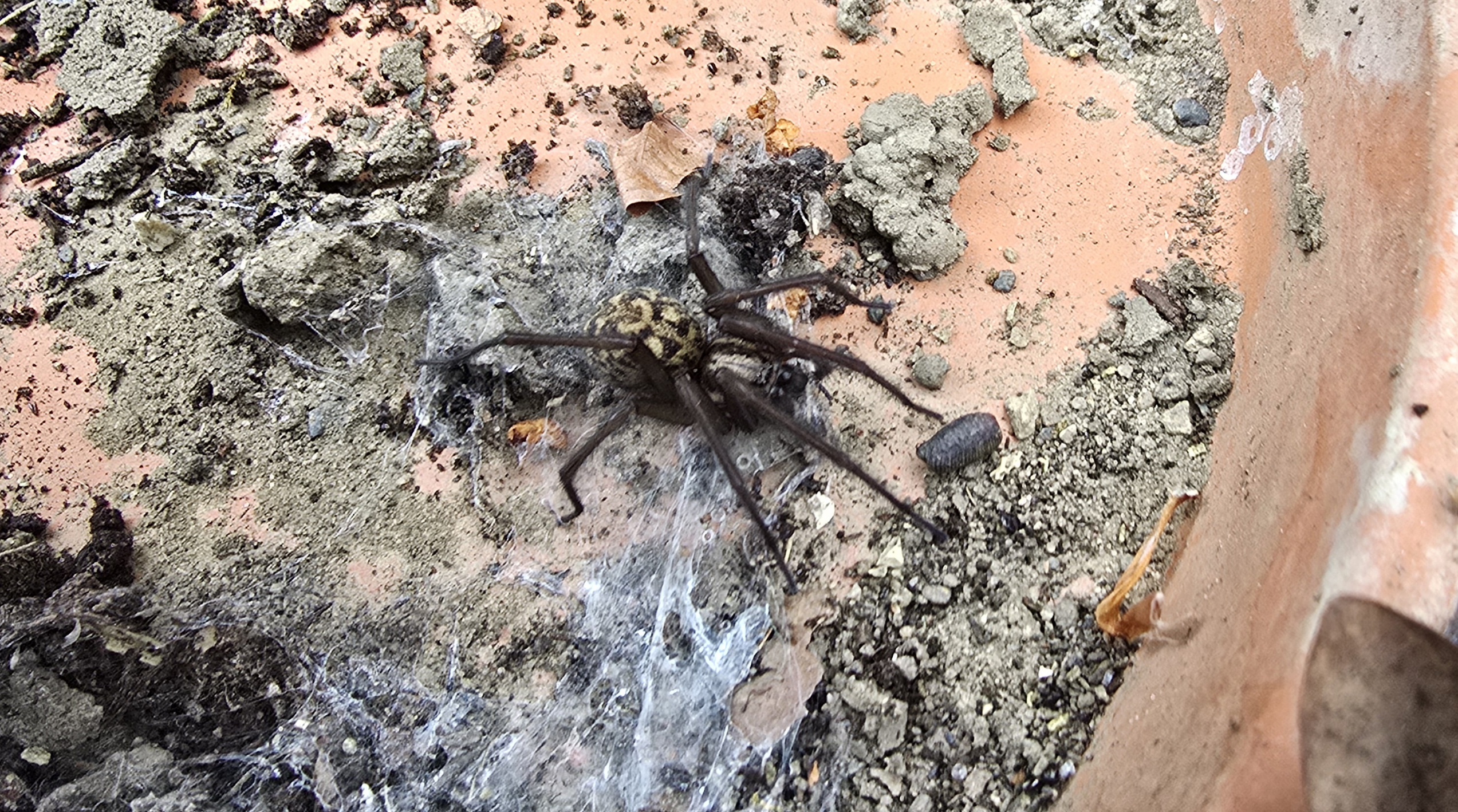
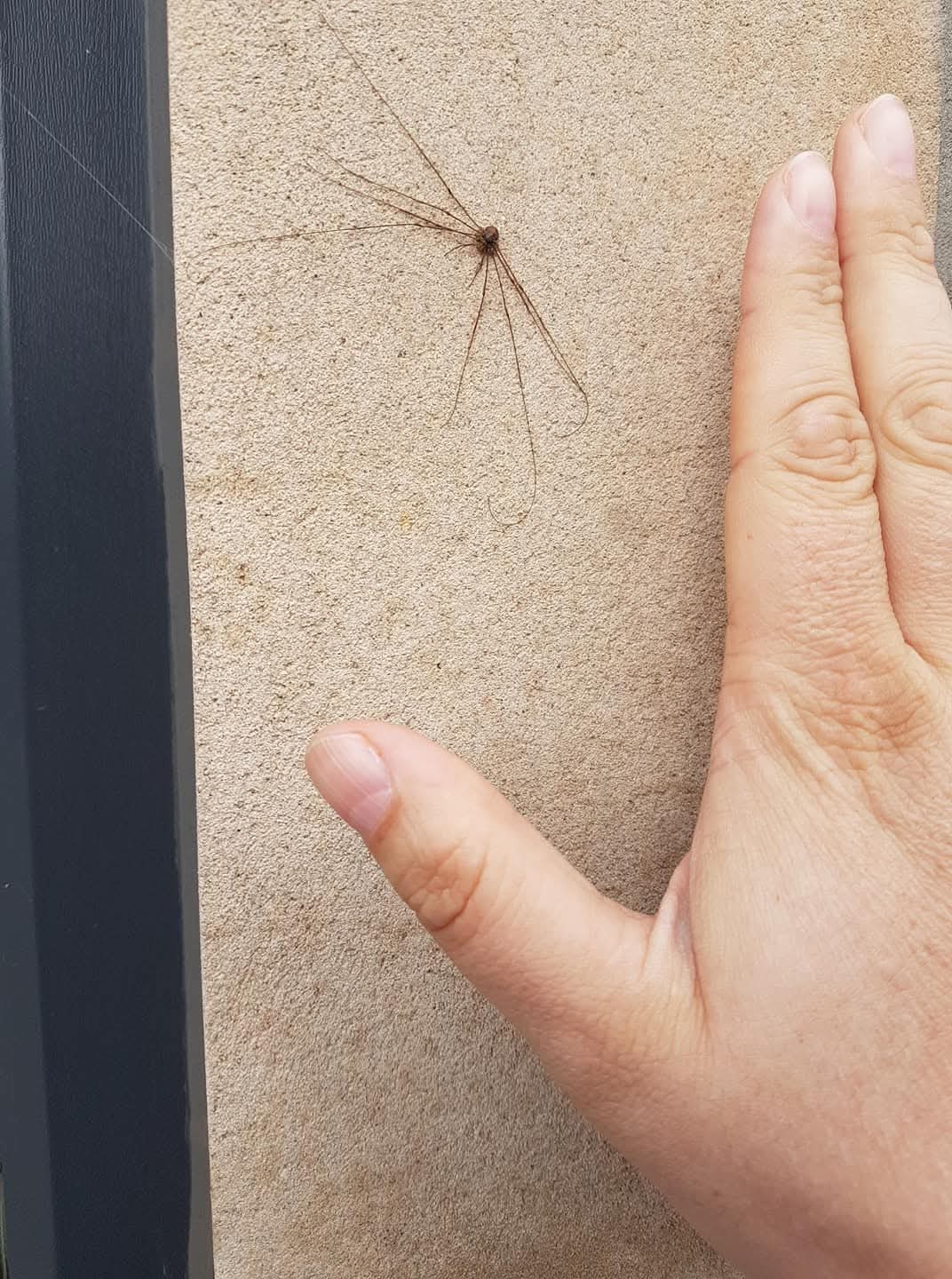
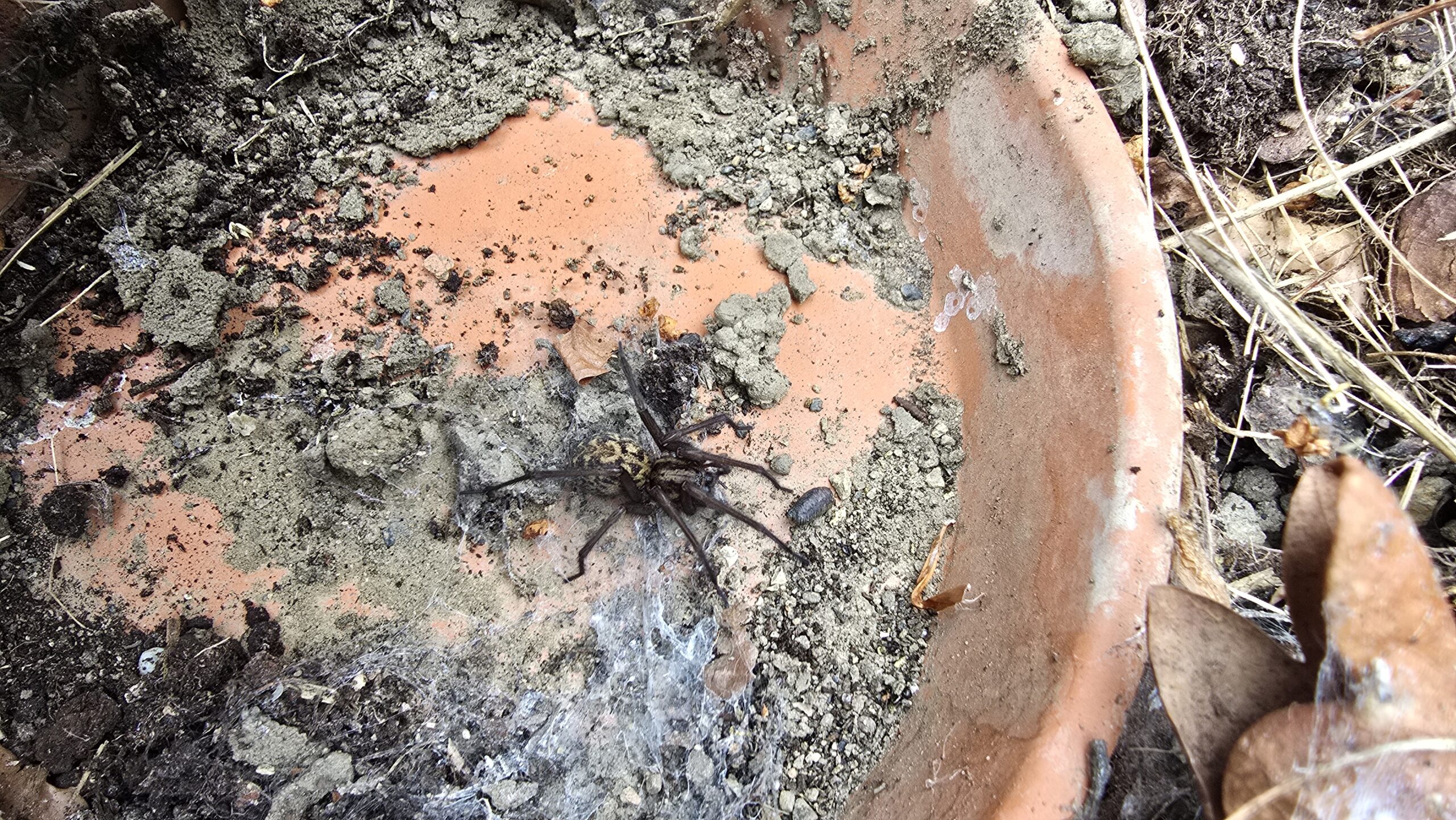
This morning in the garden I came face to face with not one but two impressive spiders. First, a huge dark spider on a terracotta pot — almost certainly a wolf spider, one of the most common large garden spiders in the UK. Then, on the wall of the house, a massive cellar spider, or “daddy long legs spider,” with legs seemingly longer than my hand. Are they dangerous? Should I be scared? Read on — today’s update has the answers, and a grammar lesson thrown in too!
Today I was in my garden. I saw two big spiders! One spider was on a pot. It was very big and dark. One spider was on the wall. It had very long legs. Spiders are not dangerous in the UK. They do not hurt people. But I was a little bit scared! Are you afraid of spiders?
This morning in my garden I found two big spiders. The first one was on a terracotta plant pot. It was large and dark brown — probably a wolf spider. The second spider was on the wall of my house. It had very, very long thin legs. This is called a cellar spider, or “daddy long legs spider.” In the UK, spiders are not dangerous. They can bite, but it is very rare and it does not really hurt. Many people are afraid of spiders, but they are actually very helpful — they eat insects like flies and mosquitoes!
While doing some gardening this morning, I spotted two impressive spiders. The first was a large, dark spider sitting on a terracotta pot — most likely a wolf spider, which is very common in UK gardens. Wolf spiders are hunters: instead of spinning webs, they chase their prey across the ground. They look quite intimidating, but they are completely harmless to humans and rarely bite. The second discovery was on the wall of the house — a cellar spider, sometimes called a daddy long legs spider. With legs that seemed almost absurdly long compared to its tiny body, it is the kind of spider that makes people jump. Interestingly, cellar spiders are often said to be the most venomous spider in the world — but this is a popular myth. Their venom is weak and their fangs are too small to pierce human skin.
A morning in the garden today produced two rather striking encounters. The first was a large, dark wolf spider resting on a terracotta pot — chunky, fast-moving, and quite alarming at close range, though entirely harmless. Wolf spiders are among the most common large spiders in UK gardens: they hunt by stalking their prey rather than using webs, and the females are often seen carrying their egg sacs or young on their backs. The second find was a cellar spider on the exterior wall — the long-limbed, delicate-looking creature also known as a daddy long legs spider. There is a persistent rumour that cellar spiders are the most venomous spiders in the world, restrained only by fangs too small to bite humans. Entomologists have comprehensively debunked this: their venom is genuinely weak and poses no threat whatsoever. Both species are in fact excellent garden allies, controlling populations of flies, mosquitoes, and other insects. Frightening to look at, perhaps — but well worth keeping around.
Two encounters in the garden this morning, both instructive. The first: a wolf spider — genus Lycosidae — settled on a terracotta pot with the particular stillness of something that knows it has been spotted. Wolf spiders are impressive animals: solitary hunters that rely on speed and sharp eyesight rather than webs, they are among the largest spiders routinely encountered in British gardens. The females are notably maternal, carrying their egg sac attached to their spinnerets and then, once hatched, bearing their spiderlings on their backs. Fearsome in appearance, entirely benign in practice. The second: a cellar spider, Pholcus phalangioides, suspended on the wall with that characteristic trembling stillness, legs spanning a width that seems disproportionate to its thread-like body. The internet’s favourite claim — that these are the world’s most venomous spiders, frustrated only by their inability to pierce human skin — has been tested and firmly refuted. Their venom is mild; their fangs, while capable of breaking skin in rare cases, deliver nothing of consequence. Both species are, by any reasonable assessment, assets to a garden. The fear they inspire says considerably more about us than it does about them.
Types of Spider — Are They Dangerous? Do They Bite?
🕷 Wolf Spider (Lycosidae) — Large, dark, fast-moving. Found in gardens, under stones, on low vegetation. Does NOT spin a web — it hunts on foot. Bites are very rare and cause only mild irritation. Dangerous? No. Scary-looking? Absolutely.
🕷 Cellar Spider / Daddy Long Legs Spider (Pholcus phalangioides) — Tiny body, extremely long thin legs. Found on walls, ceilings, and in corners. Spins a loose, messy web and vibrates rapidly when disturbed. The “world’s most venomous” myth has been thoroughly debunked. Dangerous? No. Unsettling? For many people, yes.
False Widow (Steatoda nobilis) — The one UK spider that can give a genuinely painful bite, though it is rarely aggressive and only bites when threatened. Not dangerous to healthy adults but worth being careful around.
Money Spider (Linyphiidae) — Tiny spiders said to bring good luck. Completely harmless and very beneficial.
Jumping Spider (Salticidae) — Small, curious, with huge forward-facing eyes. Known for turning to look at you when you look at them. Completely harmless and rather endearing.
5 Words to Learn
| English | Chinese | Dutch | French | Gaelic | German | Hindi | Indonesian | Japanese | Russian | Spanish |
|---|---|---|---|---|---|---|---|---|---|---|
| Spider | 蜘蛛 (Zhīzhū) | Spin | Araignée | Damhan-allaidh | Spinne | मकड़ी (Makaṛī) | Laba-laba | クモ (Kumo) | Паук | Araña |
| Venom | 毒液 (Dúyè) | Gif | Venin | Nimh | Gift | विष (Viṣ) | Bisa | 毒液 (Dokueki) | Яд | Veneno |
| Web | 蜘蛛网 (Zhīzhū wǎng) | Spinnenweb | Toile | Lìon damhain | Spinnennetz | जाला (Jālā) | Jaring laba-laba | クモの巣 (Kumo no su) | Паутина | Telaraña |
| Prey | 猎物 (Lièwù) | Prooi | Proie | Creach | Beute | शिकार (Śikār) | Mangsa | 獲物 (Emono) | Добыча | Presa |
| Phobia | 恐惧症 (Kǒngjù zhèng) | Fobie | Phobie | Geilt-eagal | Phobie | भय (Bhay) | Fobia | 恐怖症 (Kyōfushō) | Фобия | Fobia |
Adjective + Preposition Phrases
OF: afraid of · scared of · terrified of · fond of · tired of · proud of · ashamed of · aware of · capable of
IN: interested in · involved in · experienced in · disappointed in
AT: good at · bad at · surprised at · shocked at · amazed at · terrible at
WITH: pleased with · satisfied with · bored with · familiar with · obsessed with
ABOUT: worried about · excited about · anxious about · serious about · enthusiastic about
FOR: responsible for · famous for · ready for · sorry for · grateful for · known for
TO: allergic to · sensitive to · similar to · opposed to · used to
Ready to Improve Your English?
Personalised one-to-one English lessons for all levels — A1 to C1+.
Book your session today and start your journey to fluency!