

Your Daily Language Update
Welcome back, language learner! Great to have you here.
Not yet following? Join the Languages Central community!
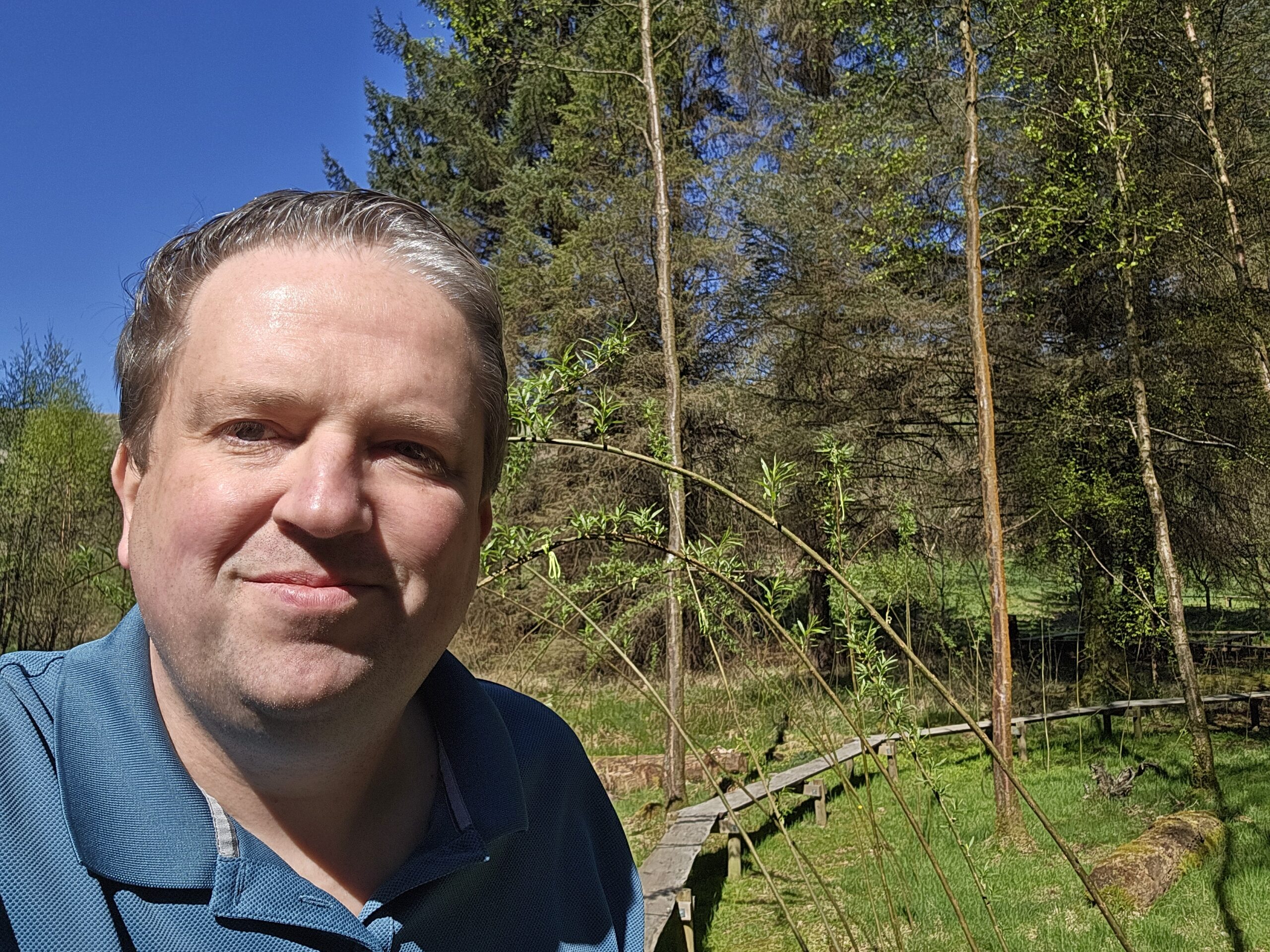
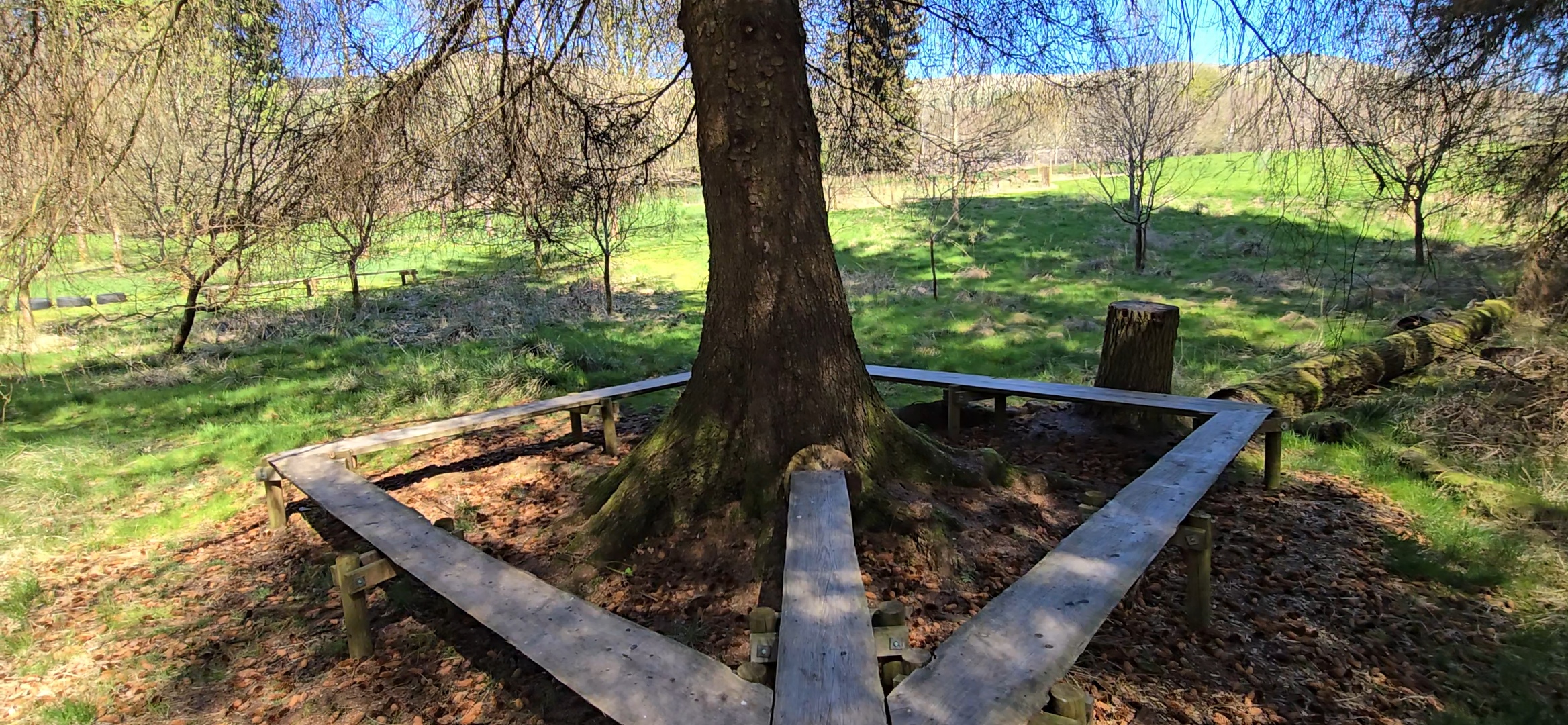
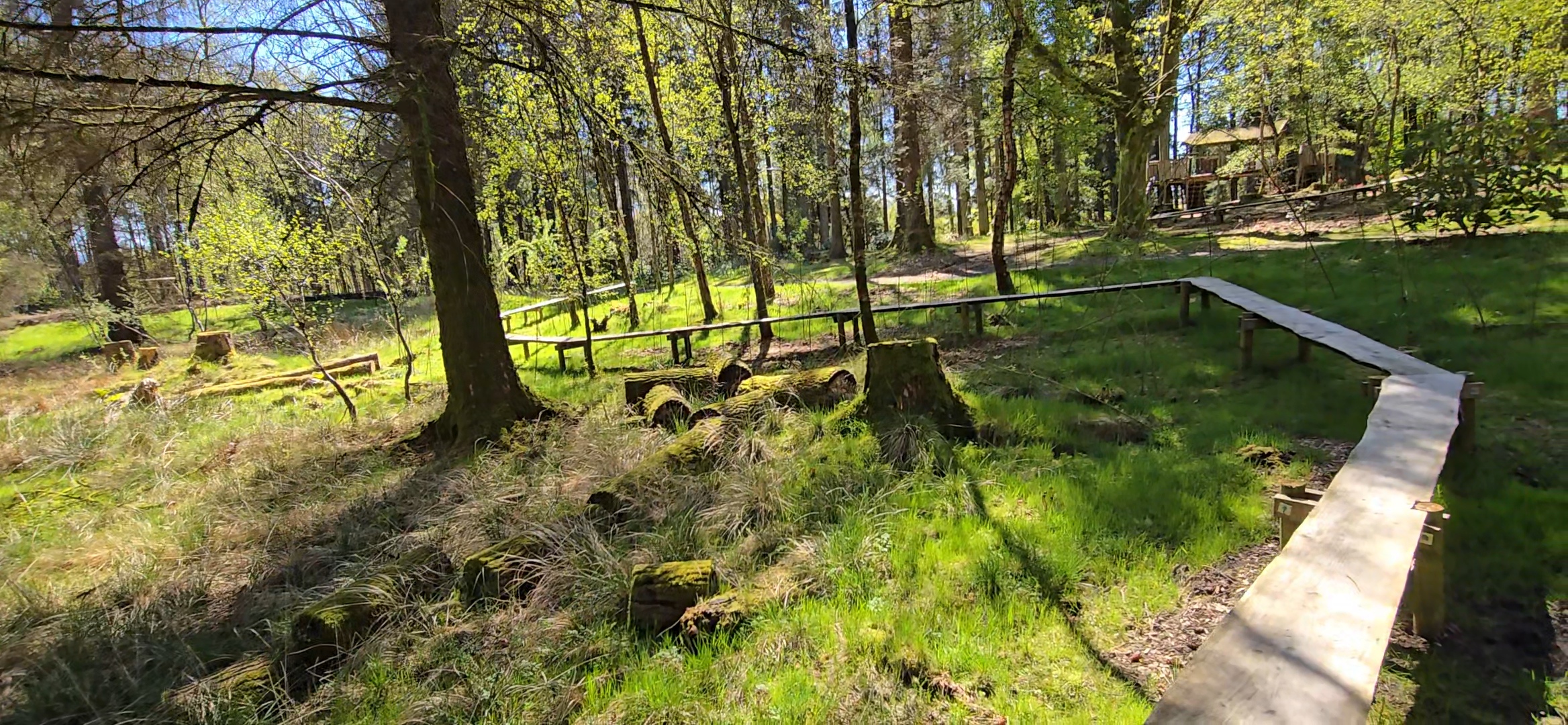
Thursday’s Walk: The Raised Boardwalk of the Stewart Woodland, Cowden
On Thursday I went to a wood. There is a special path. The path is made of wood. It is above the ground. You can walk on it. I walked slowly. The wood is very green and beautiful. I liked it very much!
On Thursday 30th April I walked along a special wooden path in the Stewart Woodland at Cowden in Scotland. The path is raised above the ground so you can walk through the trees without touching the wet grass. It goes around big trees and through the forest. The sun was shining and everything was very green. It was a lovely walk on a beautiful spring day.
Also on my Thursday visit to Cowden was a walk along the raised boardwalk that winds its way through the Stewart Woodland. This elevated wooden path lifts you just above the forest floor, letting you move quietly through the trees without disturbing the ground beneath. On a bright spring morning with the leaves just coming out, the light through the canopy was really beautiful. It felt peaceful and calm — a lovely contrast to the fairy village nearby. If you like being surrounded by nature, this walk is well worth it.
One of the quieter highlights of my Thursday visit to Cowden was the raised boardwalk running through the Stewart Woodland. Elevated just above the forest floor, it takes you gently through the trees — past mossy stumps, beneath spreading canopies, and around the broad base of some impressive older specimens. There’s something about being lifted slightly off the ground that changes how you experience a woodland: you move more slowly, notice more, and feel more like a guest passing through rather than someone just walking past. On a clear April morning with spring light filtering through the new leaves, it was quietly wonderful.
The raised boardwalk through the Stewart Woodland at Cowden is one of those features that rewards unhurried attention. Running at ankle-to-knee height above the forest floor, it creates a subtle but meaningful shift in perspective — you are at once within the woodland and slightly apart from it, moving through the ecosystem without compacting the soil or disturbing the ground layer. On the Thursday morning of my visit, with spring asserting itself through fresh canopy growth and shafts of clear light, the walk was genuinely meditative. There is a quality of attentiveness that elevated paths seem to encourage: slower pace, more observation, a greater awareness of what surrounds you at every level — root, trunk, branch, sky. It is a small but considered piece of design in a landscape full of them.
What Do We Call This Path? — A Vocabulary Exploration
The wooden path at Cowden has several names in English. Each one gives a slightly different impression of what it is. Here’s a guide to the most common terms — and one spectacular type you might not have heard of yet!
Elevated walkway — slightly more formal. “Elevated” (raised higher) + “walkway” (a path for walking). Often used in urban architecture too — think airports or shopping centres.
Raised forest path — clear and descriptive, though less technical. Anyone would understand it immediately, making it great for everyday writing.
Treetop walk / canopy walkway — now we’re going up! A canopy walkway is suspended high in the trees, level with the treetops. These can be 20, 30, even 50 metres above the ground. Famous examples include the Kew Gardens Treetop Walkway in London and those found in rainforests in Malaysia and Costa Rica. Would you be brave enough to walk on one? 😄
5 Words to Learn
| English | Chinese | Dutch | French | Gaelic | German | Hindi | Indonesian | Japanese | Russian | Spanish |
|---|---|---|---|---|---|---|---|---|---|---|
| Boardwalk | 木板路 (Mùbǎn lù) | Vlonderpad | Promenade en bois | Cabhsair-clàir | Holzsteg | लकड़ी का रास्ता | Jalan kayu | 板張り歩道 (Itabari hodō) | Деревянный настил | Pasarela de madera |
| Canopy | 树冠 (Shùguān) | Bladerdak | Canopée | Sgàile-craoibhe | Blätterdach | छत्र (Chatra) | Kanopi | 樹冠 (Jukan) | Полог леса | Dosel |
| Elevated | 升高的 (Shēnggāo de) | Verhoogd | Surélevé | Àrd | Erhöht | ऊंचा (Ūṃcā) | Ditinggikan | 高架の (Kōka no) | Приподнятый | Elevado |
| Ecosystem | 生态系统 (Shēngtài xìtǒng) | Ecosysteem | Écosystème | Eag-shiostam | Ökosystem | पारिस्थितिकी तंत्र | Ekosistem | 生態系 (Seitaikei) | Экосистема | Ecosistema |
| Suspended | 悬挂的 (Xuánguà de) | Hangend | Suspendu | Crochte | Hängend | निलंबित (Nilambit) | Tergantung | 吊り下げられた | Подвешенный | Suspendido |
Phrasal Verbs
Example: “set” means to place something, but “set off” means to begin a journey.
Phrasal verbs are extremely common in everyday English and are essential for natural, fluent speech.
Adverbs
Many end in -ly (quietly, gently, carefully) but not all: fast, well, hard, just, already are also adverbs.
⚠️ Common mistake: “I feel good” (adjective) vs. “I played well” (adverb).
Ready to Improve Your English?
Personalised one-to-one English lessons for all levels — A1 to C1+.
Book your session today and start your journey to fluency!